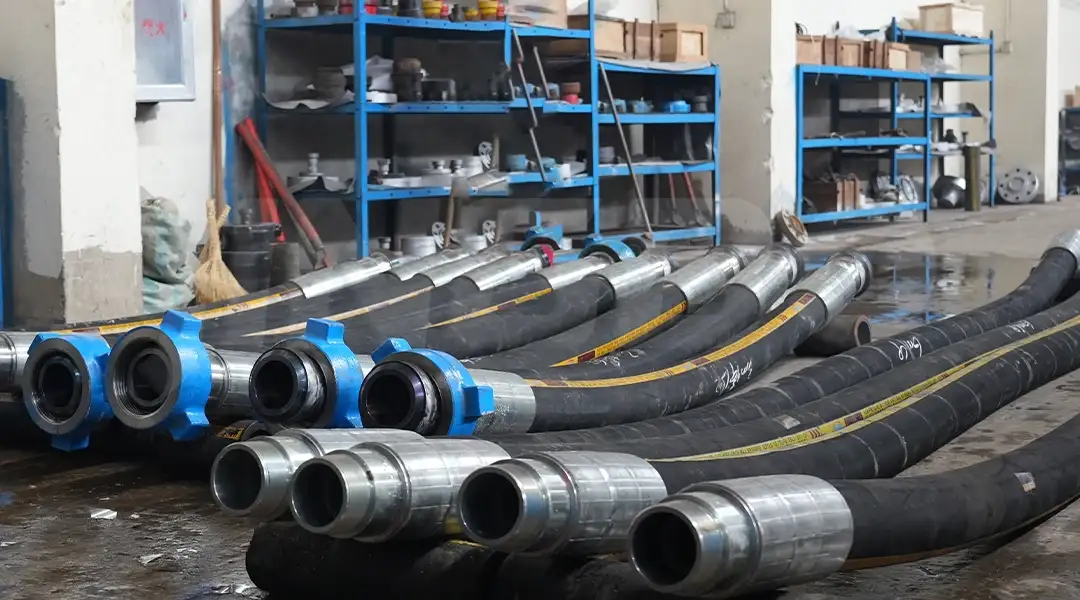
Company Profile & Certifications
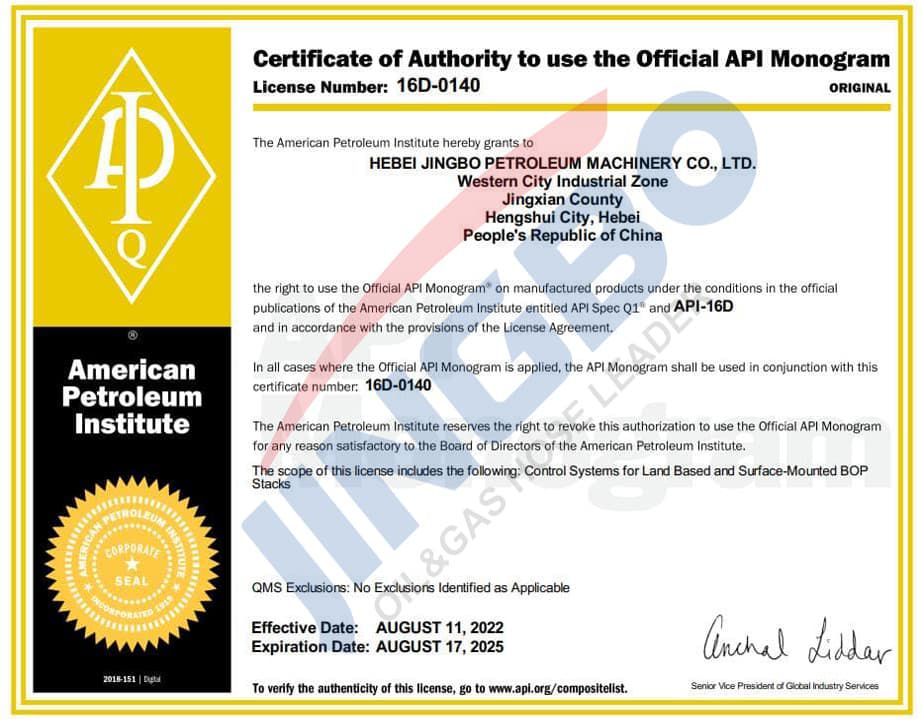
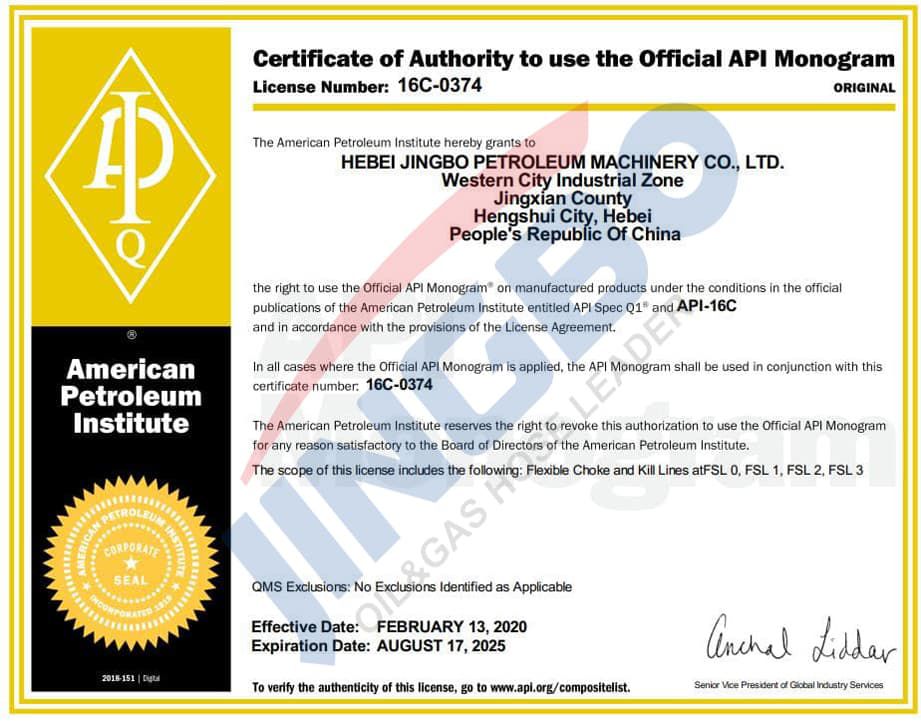
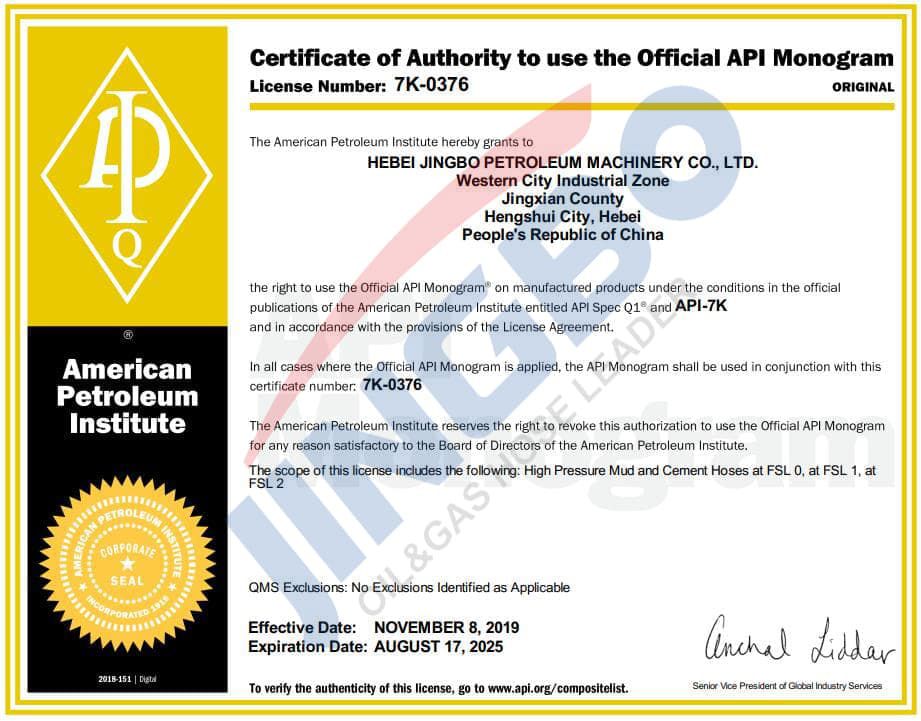
Established in 1986, Hebei Jingbo Petroleum Machinery has been a trusted name in the industry for over three decades. Our commitment to excellence is validated by our adherence to international standards. We hold the American Petroleum Institute (API) Spec 7K-0376 certification, alongside ISO 9001:2015 for quality management systems. These credentials ensure that our Kelly Hoses are manufactured to the highest global specifications for drilling equipment.
Product Structure: Engineered for Extreme Pressure
Our Kelly Hose features a robust, multi-layer construction designed to withstand the high-pressure pulsations and flexing encountered during rotary drilling. The typical structure includes:
- Inner Rubber Layer: A synthetic rubber compound, resistant to oil, abrasion, and drilling fluids, ensuring a smooth flow path.
- Middle Rubber Layer: Provides bonding and flexibility between reinforcement layers.
- Fiber Line: Textile layers that stabilize the structure and prevent kinking.
- Steel Wire Spiral Layer: High-tensile steel wires spirally wound for maximum pressure containment and anti-crush properties.
- Outer Rubber Layer: A tough, weather, and abrasion-resistant cover that protects the reinforcement from environmental damage.
Step-by-Step Manufacturing Process
1. Raw Material Preparation & Inner Tube Extrusion
The process begins with the extrusion of the inner rubber layer. Specialized extruders shape the oil-resistant rubber compound to precise thickness and diameter, forming the core of the hose.
2. Reinforcement Application
The hose body is then transferred to braiding and spiraling machines. Here, fiber lines and multiple layers of high-tensile steel wire are applied. This spiral reinforcement is critical for achieving the burst pressure requirements of API 7K.
3. Intermediate Bonding
Between each reinforcement layer, a middle rubber layer is applied. This acts as a bonding agent, preventing friction between the steel wires and ensuring the hose acts as a single, cohesive unit under pressure.
4. Outer Cover Extrusion
A durable outer rubber layer is extruded over the reinforcement. This cover is formulated to resist UV radiation, ozone, salt water, and mechanical wear.
5. Marking & Cloth Wrapping
For identification and traceability, the hose is marked with specifications (size, pressure rating, API monogram). A layer of cloth wrapping is then applied. This wrapping compacts the layers during the next stage and ensures a smooth external finish.
6. Vulcanization
The wrapped hose is moved to a steam autoclave or continuous vulcanizer. Under controlled heat and pressure, the vulcanization process chemically cross-links the rubber compounds. This transforms the materials from a soft, plastic state into a strong, elastic, and durable finished product.
Final Assembly & Quality Control
Once the long-length hose is manufactured, it undergoes final assembly and rigorous testing:
- Hose Cutting: The continuous hose is cut to the customer’s specified lengths.
- Connection Crimping: Factory-installed couplings, such as hammer unions or flanges, are attached using precision hydraulic crimping machines. The crimp diameter is strictly monitored to ensure a permanent, leak-proof seal.
- Hydrostatic Pressure Testing: Every assembled hose is subjected to a high-pressure test (exceeding working pressure) to validate the integrity of both the hose body and the coupling retention.
- Post-Test Measurement: After pressure testing, the hose length is re-measured to ensure no growth or contraction exceeds specifications.
- Cleaning & Dressing: The hose bore is thoroughly cleaned to remove any debris, and the exterior is prepared for shipment.
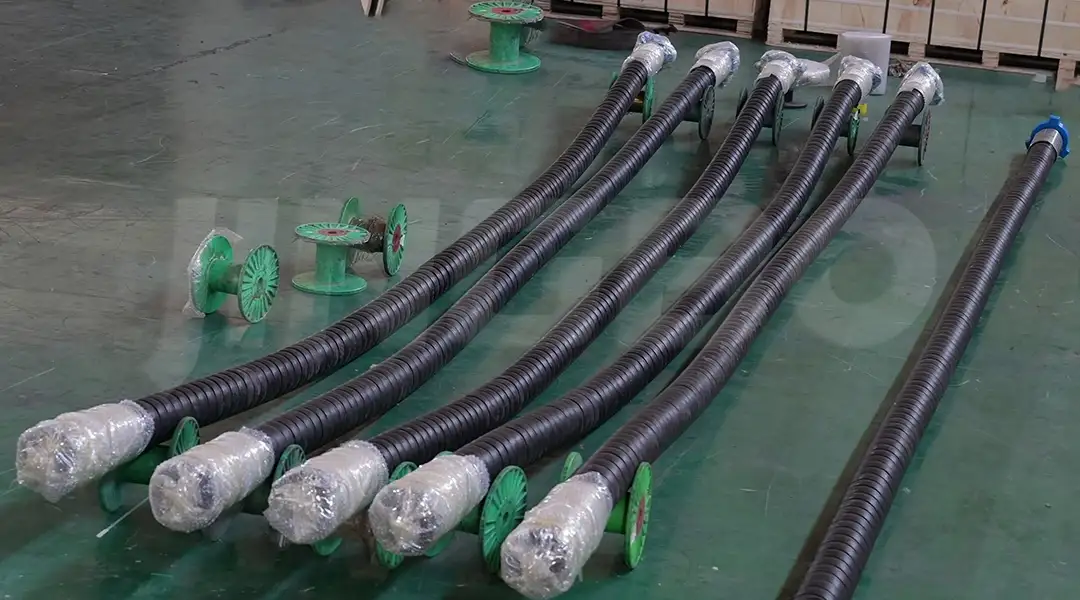
- Packing: Finally, the finished products are carefully coiled or spooled, protected with end-caps and wrapping, and prepared for safe transit to global destinations.
Why Choose Hebei Jingbo?
With a history dating back to 1986 and API-7K certification, our manufacturing process is not just about production—it is about engineering reliability. From the initial extrusion to the final pressure test, every step is monitored to ensure that your drilling operations proceed safely and efficiently.