
Learn how rotary hoses enable safe, high‑pressure mud circulation in oil and gas drilling.
Hey there! I’m a supplier of API‑certified rotary hoses, and I’m excited to explain how these essential components work. Whether you’re drilling a new well or maintaining an existing rig, understanding the rotary hose helps you make better purchasing and maintenance decisions.
Let’s dive in – from the basics to the benefits, and even some maintenance tips.
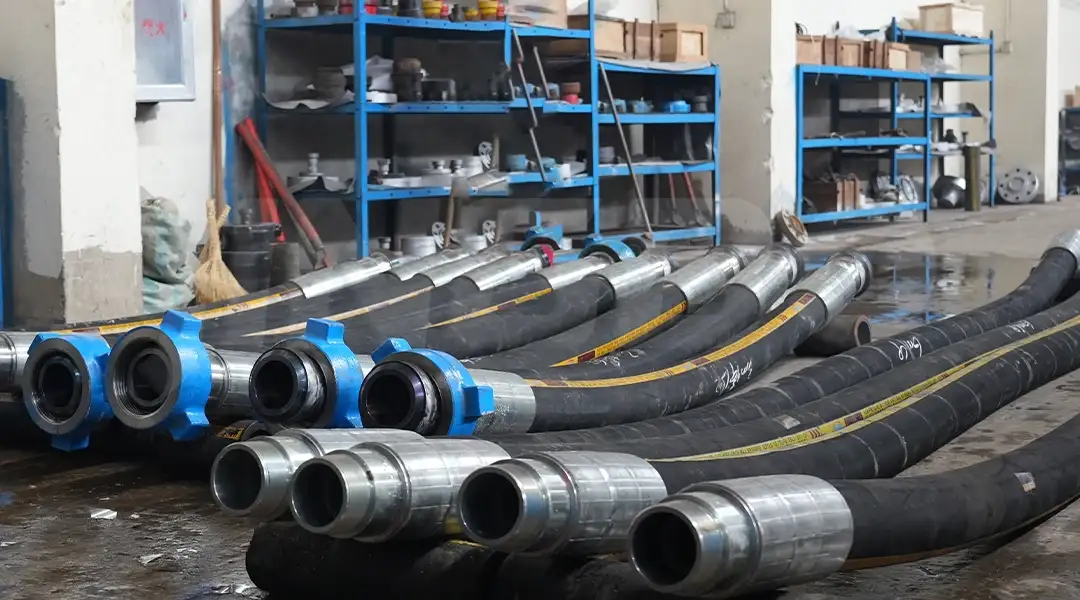
What Is a Rotary Hose?
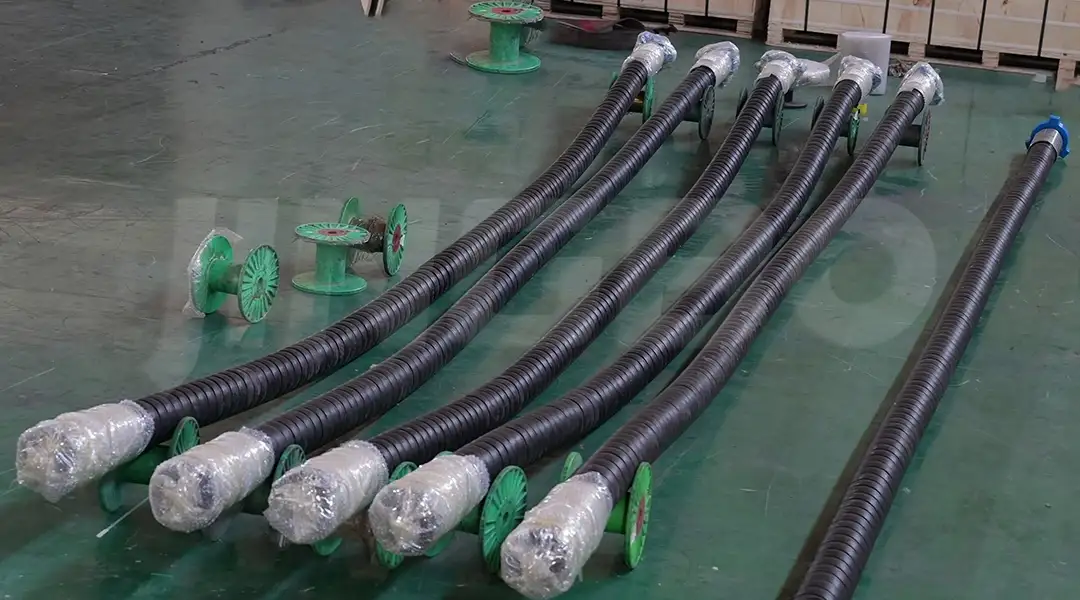
In the oil and gas industry, a rotary hose (also known as a kelly hose or drilling hose) is a high‑pressure flexible connection that carries drilling mud from the standpipe to the swivel or top drive.
Contrary to a common misunderstanding, the hose itself does not spin. Instead, it is designed to withstand constant vibration, pressure surges, and vertical movement of the traveling block while remaining flexible. Its “rotary” name comes from its role in rotary drilling systems, where the drill string rotates to bore through rock.
Key Characteristics
- High‑pressure rating – Typically up to 5,000 or 7,500 psi working pressure
- Large diameter – Usually 2½″ to 5″ inside diameter
- Flexible yet rugged – Allows vertical motion without kinking
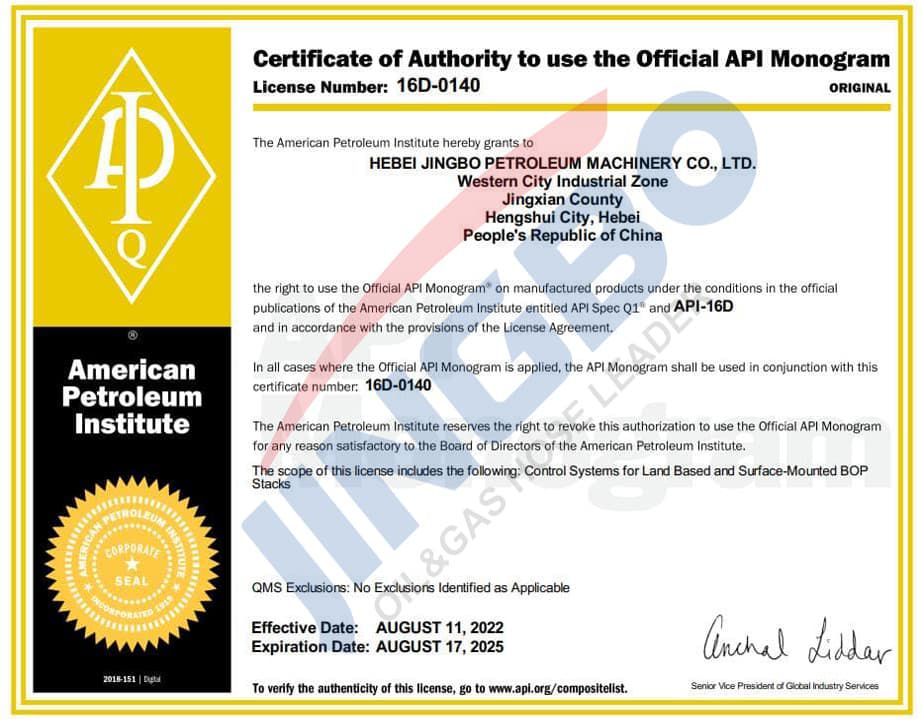
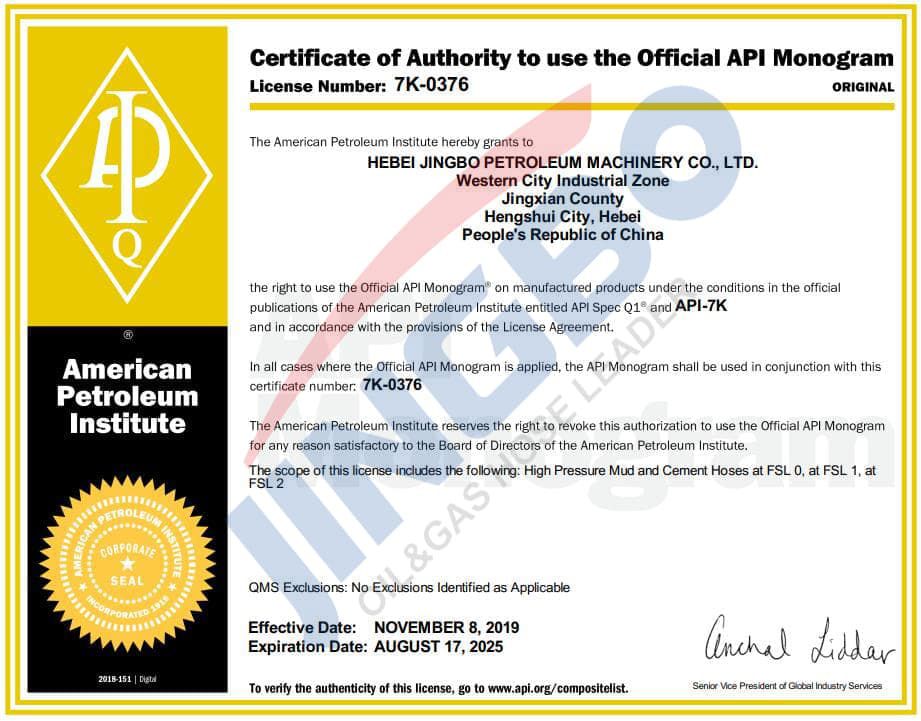
- API 7K certified – Manufactured to international drilling standards
Main Components of a Rotary Hose
A quality rotary hose consists of several layers, each with a specific purpose.
| Component | Function | Typical Material |
| Inner tube | Carries abrasive, corrosive drilling mud | Oil‑resistant synthetic rubber (Nitrile/HNBR) |
| Reinforcement layers | Provides burst strength and flexibility | Multiple spirals of high‑tensile steel wire + textile fabric |
| Middle rubber layer | Bonds reinforcement layers and reduces friction | Special rubber compound |
| Outer cover | Protects against weather, abrasion, and fire | Tough synthetic rubber (optionally fire‑resistant) |
| End couplings | Connects to standpipe and swivel | Swaged hammer unions or flanges |
The inner tube is typically 3/16″ thick and made of modified nitrile rubber to resist oil, hydrogen sulfide, and the scouring effect of solid‑laden mud.
The steel wire spiral reinforcement is what gives the hose its ability to handle extreme pressures while still bending. Intermediate rubber layers between the wire coils prevent metal‑to‑metal friction and extend hose life.
How a Rotary Hose Works – Step by Step
Now let’s walk through the actual operation on a drilling rig.
- Mud Pump Generates Pressure
Mud pumps push drilling fluid (mud) from the mud tanks into the standpipe – a rigid steel pipe that runs up the side of the derrick. - Rotary Hose Connects Standpipe to Swivel
One end of the rotary hose is connected to the top of the standpipe. The other end connects to the swivel (or top drive) which hangs from the traveling block. Because the traveling block moves up and down as drilling progresses, the hose must be flexible enough to follow that motion. - High‑Pressure Mud Flows Through the Hose
The mud, typically at 2,000 to 5,000 psi, flows through the hose’s inner tube. The steel wire reinforcement prevents the hose from bursting or expanding excessively, while the rubber layers absorb pressure spikes caused by the reciprocating mud pumps. - Swivel Allows Rotation While the Hose Remains Stationary
Here’s the key point: the rotary hose does not rotate. The swivel (or top drive) above it has internal bearings that allow the drill string to spin while the upper part – and the attached rotary hose – stays stationary. The hose simply provides a pressure‑tight, flexible link. - Mud Travels Down the Drill String and Returns
From the swivel, mud goes down the drill pipe, out through the bit (cooling and lubricating it), and carries rock cuttings back up the annulus to the surface. The rotary hose enables this continuous circulation while the block moves vertically – sometimes tens of feet per minute.
Advantages of Using a High‑Quality Rotary Hose
- Prevents kinking – Multiple reinforcement layers allow tight bending radii without collapsing.
- Withstands pressure surges – Designed for the pulsating flow of piston pumps.
- Resists abrasion – Thick nitrile tube handles sand‑laden mud.
- Long service life – Quality materials and proper maintenance can give years of reliable service.
- API 7K certified – Provides traceability and confidence for drilling contractors.
Common Applications (Beyond Rotary Drilling)
While the rotary hose is best known for onshore and offshore rotary drilling, similar hose designs are used for:
- Vibrator hoses – Connecting mud pump to standpipe (absorbs vibrations)
- Choke and kill lines – Well control applications
- Cementing operations – Pumping cement slurries downhole
- Motion compensator hoses – Offshore, compensating for wave heave
Maintenance and Care Tips
To maximize the life of your rotary hose:
- Inspect before each use – Look for cuts, bulges, blisters, or exposed reinforcement.
- Check coupling retention – Make sure swaged fittings show no signs of slippage.
- Pressure test regularly – Hydrostatically test at 1.5–2 times working pressure as per API 7K.
- Avoid sharp bends – Never exceed the minimum bend radius listed on the hose.
- Store properly – Coil loosely indoors or cover to prevent UV and ozone damage.
- Keep records – Track test dates, hours of service, and any repairs.
⚠️ Never use a rotary hose that has failed a pressure test or shows exposed steel reinforcement. It can burst under pressure, causing serious injury.
Ready to Upgrade Your Drilling Hose?
I’d love to chat about your specific requirements. Whether you need a standard rotary hose, a vibrator hose, or a complete choke/kill line assembly, we have the right solution for you.
Contact us today – 24/7 online support, 12‑month warranty, and detailed installation documentation included.